Braz. political sci. rev.2026;20(2):e0003.
Where Do City Councilors Go? Gender and Political Career Trajectories in Municipal Politics

DOI: 10.1590/1981-3821202600020003
Abstract
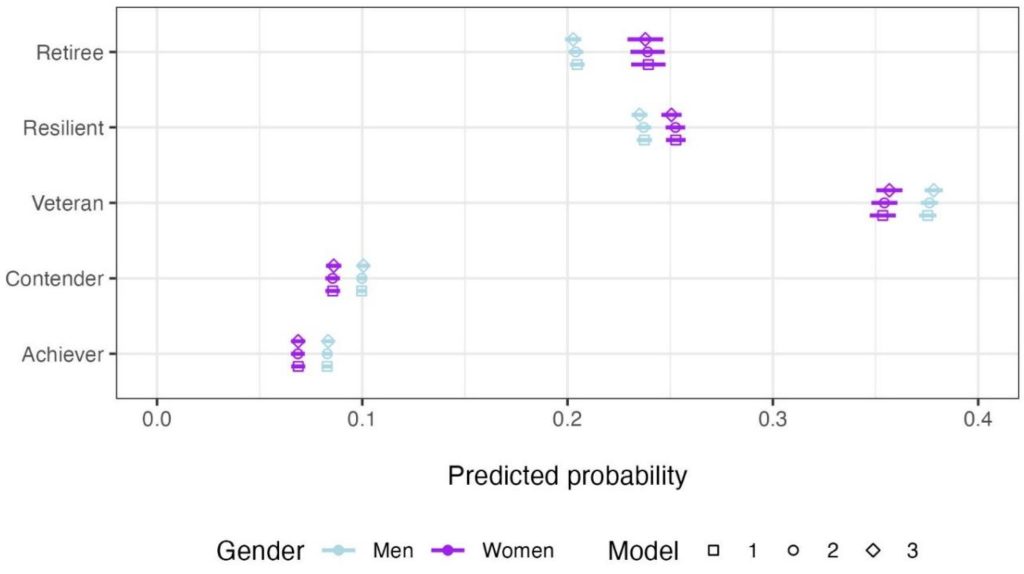
Although research on gender inequality in political representation often focuses on issues such as institutional constraints, the role of political parties, campaign costs, or shortcomings in the design of gender quotas, fewer studies examine women’s political careers directly. This article analyzes women’s political careers beginning at the city council level, the most accessible and available elected office in the Brazilian political system. To do so, we conduct a long-term analysis (2002–2020) of the prior and subsequent electoral trajectories of city councilors elected in 2008, using descriptive statistics and multiple regression models. Our results show that women councilors have a higher predicted probability of being classified in trajectories characterized either by exit from political careers (‘retiree’) or by continued participation without additional electoral success (‘resilient’). Men, in contrast, have a higher predicted probability of following trajectories marked by electoral success and/or attempts to pursue higher office (‘veteran’, ‘contender’, and ‘achiever’).
Keywords: gender; political careers; reelection; representation; women city councilors