Braz. political sci. rev.2024;19(2):e0003.
When Democracy Divides the Electorate: Voting in the 2022 Brazilian Presidential Election
Mario Fuks
 , Gabriel Avila Casalecchi
DOI: 10.1590/1981-3821202500020003
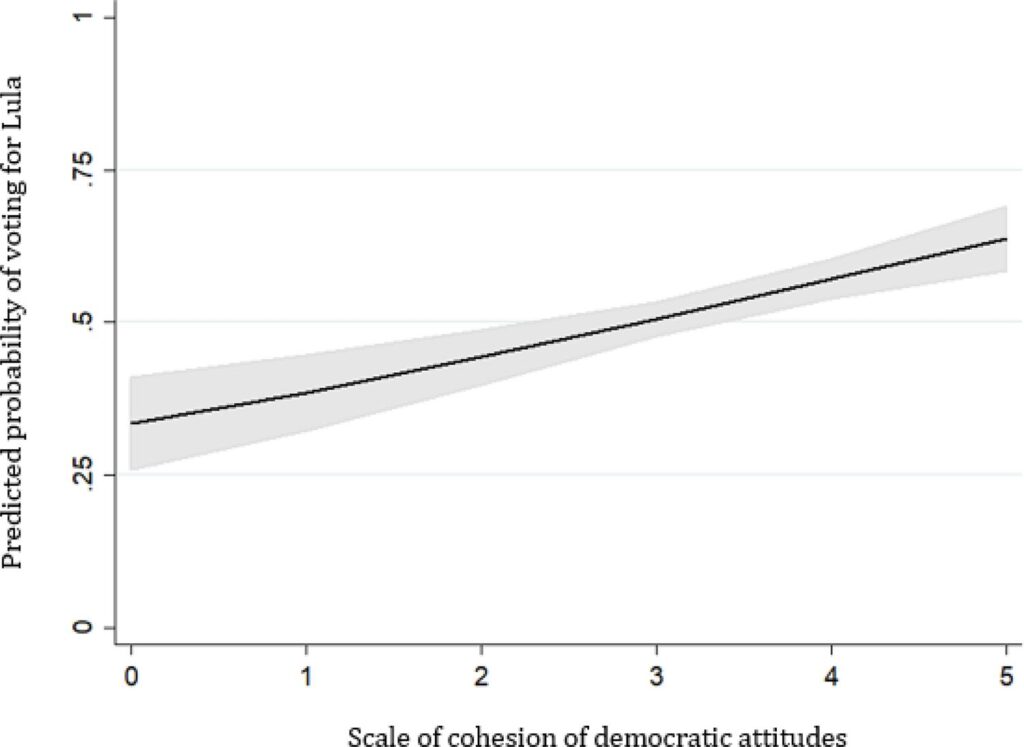
This article examines the effect of democratic attitudes on voting in 2022. Our hypothesis is that the rising prominence of the topic of democracy in politics and in the public debate, starting in 2013 and becoming more pronounced after 2018, resulted in a division of the electorate into two camps based on their varying degrees of support for democratic principles — something not observed in earlier elections. To test this hypothesis, we utilized two surveys: the 2010 AmericasBarometer and the 2023 Clivagens Políticas no Brasil. The overall result shows that democratic attitudes — such as support for voting as a method for selecting who governs, the separation of powers, political participation, the rule of law, and minority rights — played a more significant role in explaining the vote for president in 2022 than they did in 2010. More than that, we identified a dominant pattern: except for political participation, there is a positive relationship between democratic attitudes and the vote for Lula.
Keywords: 2022 elections; democratic attitudes, public agenda; Voting
578