Braz. political sci. rev.2024;19(1):e0005.
The Torrents of Spring : The Role of Governance Capacity in the Developing World during the COVID-19 Pandemic
Gustavo Andrey de Almeida Lopes Fernandes
 , Ivan Filipe Fernandes
DOI: 10.1590/1981-3821202500010005
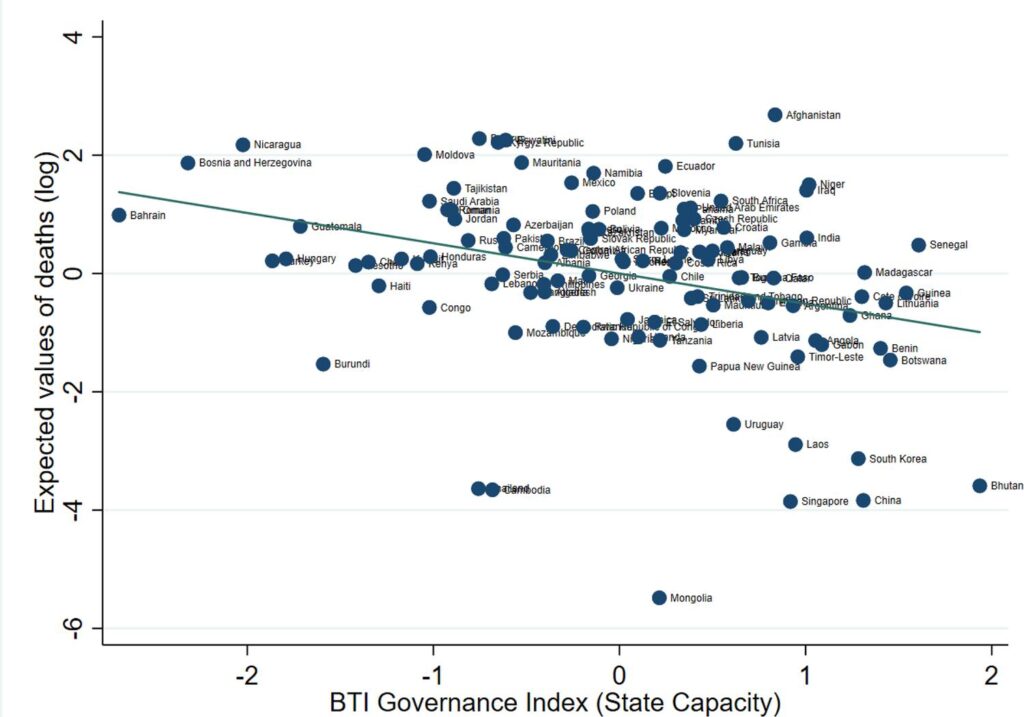
This study offers a comprehensive analysis of how governance capacities in developing countries respond to the challenges that COVID-19 posed. We established a theoretical framework to delve into the multifaceted nature of governance capacities, exploring two distinct aspects of governance: the Weberian one, which focuses on material and organizational capacities, and the Tocquevillian one, which focuses on coordination and associational capacities. We examined these four governance dimensions to illustrate how these distinct skills influence the effectiveness of governance. Our analysis quantifies the impact of the COVID-19 pandemic using such metrics as confirmed cases and deaths. We employ standard and dynamic panel data methodologies to mitigate potential omitted variable bias. Our research findings indicate that countries with robust governance capacities, as assessed by the Bertelsmann Stiftung’s Transformation Governance Index, are better equipped to respond effectively to pandemic crises. By applying several models and rigorous robustness tests, we demonstrate efficient resource utilization, the ability to guide and prioritize decision-making within the government, and commitment to cooperation and coordination with other nations and international organizations are the primary drivers of improved outcomes. Our findings remain robust even when controlling for relevant variables and employing estimation techniques that account for potential biases arising from unobservable confounding factors.
Keywords: coordination; Covid-19; Global South; organizations; State capacity
126